
The silent destruction of businesses that were once successful, respected, and profitable.

You built your company from scratch. Sacrificed weekends. Missed family events. Risked your savings. Survived economic downturns, tough customers, cash flow crises, and competitors determined to undermine everything you worked for. You earned your clients. Built relationships. Developed expertise. Created jobs. Gave your company years of your life. And in the end, you succeeded.
Then the world changed.
A competitor started serving customers faster as their operations were automated. Another identified market opportunities before you even noticed them. A smaller company entered your field with a fraction of your resources but with a radically different approach. Customers who used to wait patiently for your service started expecting instant responses. Your experienced staff struggled to keep up with the new changes. Your costs went up. Your margins went down. And the strategies that made you successful started producing diminishing returns.
You didn’t forget how to run your business. The world changed the rules while you were busy playing by the old ones.
This isn’t a story of sudden collapse. It’s a quieter, more painful pattern. Recent research and executive surveys show that most organizations investing in AI don’t see transformative results. BCG’s 2025 analysis found that about 5 percent of companies derive significant value from AI, while 60 percent report minimal returns despite real investment. S&P Global Market Intelligence indicated that 42 percent of firms abandoned most of their AI initiatives in 2025, more than double the previous year. Gartner’s data revealed that at least half of AI projects were abandoned post-proof-of-concept by the end of 2025, due to poor data quality, rising costs, unclear business value, and insufficient risk controls. 84 percent of CIOs and CTOs at large firms said legacy limitations forced them to abandon at least one experimental AI project. The models rarely represent the obstacles themselves. It’s the legacy systems, fragmented data, siloed teams, and governance structures that slow decision-making.
The pattern is familiar. Kodak invented the digital camera in 1975 and understood the threat. Management chose to protect the highly profitable film business instead of fully capitalizing on the opportunity. By the time digital became inevitable, the company was competing in markets where it had no structural advantage. It filed for bankruptcy in 2012. Blockbuster saw the shift to mail-order DVDs and streaming. In 2000, it turned down an opportunity related to Netflix. Its revenue model relied heavily on late fees. When it eventually tried to compete online, its internal structure, incumbent resistance, debt, and short-term investor pressure made transformation unsustainable. It filed for bankruptcy in 2010. IBM, once the world’s most profitable company, nearly collapsed in the early 1990s under the weight of organizational inertia as personal computing reshaped the market. In each case, leaders weren’t entirely blind. They saw elements of change. What they couldn’t do, or wouldn’t do quickly enough, was realign the business around the new reality while the old one still generated cash.
The Struggle
You work longer hours. Attend more meetings. Hire consultants. Buy software. Invest in marketing. Introduce new processes. Try AI tools because everyone says you should. Watch demos showcasing extraordinary productivity. Hear competitors talk about transformation. Read news about companies achieving more with less.
And you start asking questions you never expected to ask. Are we falling behind? Did we miss the opportunity? Do our competitors see something we can’t? How long can we stay in business like this? What will happen to the people who depend on this company if we make a mistake?
The pressure is relentless because the stakes are personal. Your employees depend on you. Your customers depend on you. Your family might depend on the business you built. And you can’t simply stop everything to figure out what the future requires. You must keep the company alive today while trying to understand how to save it tomorrow.
Harvard Business Review research described the new business model that explains why new technologies haven’t transformed large companies due to that very dynamic. Firms aggressively adopt AI but see only marginal gains because they use it to improve existing work rather than rethink how work itself is organized. Business units define roles, expertise, and social standing. Changing that redistributes influence. What appears as cultural inertia is actually architectural conservatism. Experimental projects proliferate. Departments report local efficiency gains. However, the overall customer outcomes and competitive position remain unchanged because AI systems fail to coordinate across functions. A study showed that 70 percent of AI initiatives fail to scale beyond initial deployment because projects remain isolated.
The Most Damaging Realization
The danger isn’t necessarily that your company lacks talent, expertise, ambition, or technology. It might be that your organization can’t convert that strength into the market speed of adaptation now demanded. You have information but struggle to act on it in time. You have skilled employees but can’t always leverage their knowledge across the whole company. You have data but can’t always see what it means for your next strategic move. You have AI tools but still face the challenge of integrating them into meaningful business outcomes. And while you’re trying to connect everything, the market keeps moving.
Your competitor doesn’t have to be better than you at everything. It may only need to adapt faster than you in the few areas that matter most. That’s how established companies lose their edge. Not necessarily through catastrophic failure, but through a thousand small failures that become impossible to ignore.
The Fear Nobody Wants to Admit
What if the business you spent decades building becomes less competitive, not because you stopped working hard, but because your organization can’t evolve quickly enough? What if your experience no longer translates into the advantage it once did? What if your competitors are using intelligence, automation, and connected systems better to get things done in days rather than weeks? What if you recognize the problem only after your best customers have already left?
There’s a particular kind of pain in realizing that yesterday’s success doesn’t guarantee tomorrow’s survival. And an even deeper pain in knowing it might require you to transform the very enterprise you worked so hard to build. The question is no longer whether the world will change. The question is whether your company can change before the cost of standing still becomes irreversible.
Enter SMARTHINKERZ
What if your business didn’t have to face the future blindly?
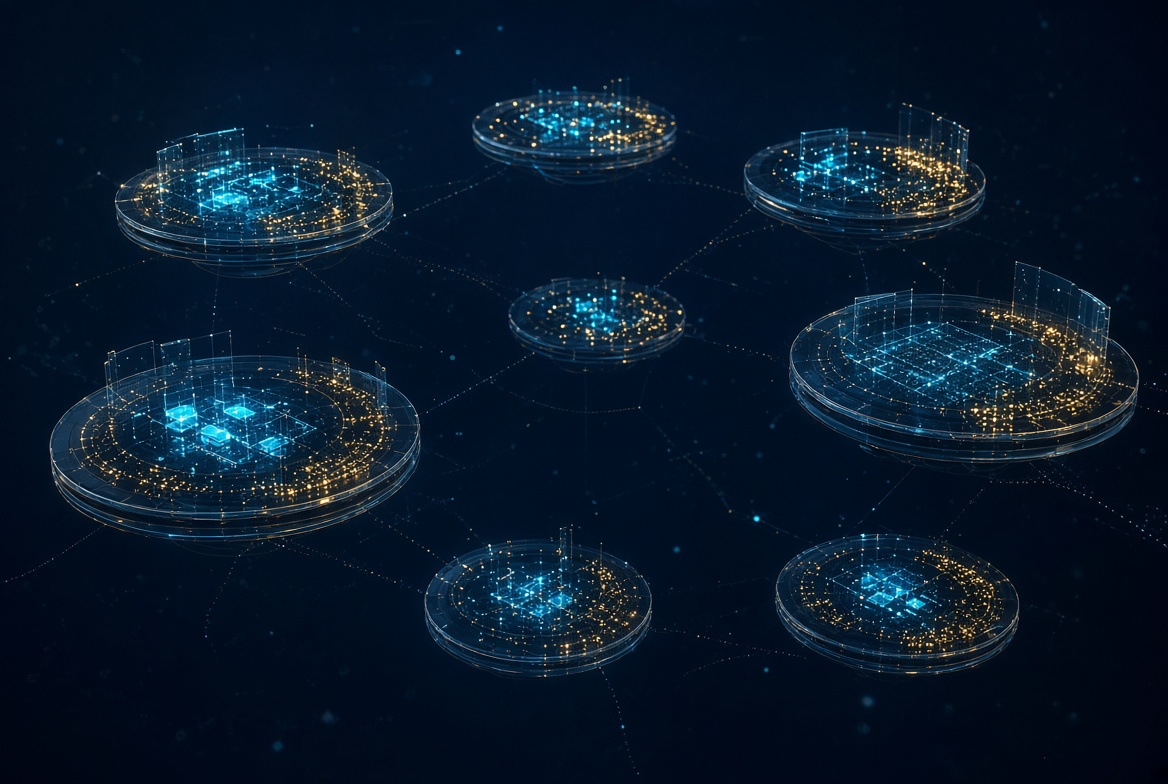
This is where SmarThinkerz steps into the story. Not as another software subscription. Not as another AI chatbot. And not another set of promises that AI will magically solve every business problem. SmarThinkerz is building a unified intelligence hub designed to help organizations move from using isolated smart tools to connected and specialized intelligence. The vision is to help businesses apply AI where it matters, link capabilities across business functions, and better utilize the information, expertise, and resources they already possess. Rather than viewing each challenge as an isolated issue, SmarThinkerz aims to build an ecosystem where specialized applications contribute to a more interconnected business intelligence environment.
The official position describes SmarThinkerz as an ecosystem rather than a single product: A suite of AI-enabled solutions that empower users to learn, build, deploy, and scale across domains, providing a unified environment where intelligence becomes actionable. The current platform includes SmarThinkerz Academy, BrainPower AI, SmarThinkerz Studio, CoreHR AI, Micro Learning, Helmable AI AI, TabiAI, and customized enterprise solutions.
BrainPower AI: Seeing Consequences Before Committing to Any Decision
A business owner considering expansion shouldn’t rely exclusively on intuition, a spreadsheet, or a single AI-generated recommendation. BrainPower AI positions itself as an AI-driven thinking, strategy, decision-making, and problem-solving system a strategic advisor powered by AI. It’s being developed to aid decision-makers in evaluating complex strategic options with their own numbers, assumptions, variables, and constraints. Planned capabilities include Monte Carlo-style exploration of many possible outcomes and interactive visualization of potential futures, risks, and opportunities. The goal is to help leaders explore questions like what happens if revenues fall short, what happens if costs rise, which assumptions have the greatest impact on the outcome, and what happens if the organization expands now rather than waits. Rather than pretending the future can be predicted, the intention is to help decision-makers understand the range of futures they may face. These elements of simulation and visualization are part of the direction being built, not features claimed to be fully operational today.
Nexus: Connecting the Intelligence Your Company Already Has
Intelligence in your company is distributed across people, documents, applications, workflows, and departments. Nexus is the connected intelligence layer being designed for the SmarThinkerz system. It aims to enable the right context exchanges, coordination, and communications between specialized applications so that work done in one place can inform others. The long-term vision is to help organizations move away from isolated AI capabilities to a more coordinated intelligence environment, with permissions, governance, and human oversight built into the system’s architecture. A new hire shouldn’t have to manually reconstruct the organization’s history. A past decision should retain its context. An AI response should take advantage of suitable organizational context instead of starting from a blank prompt. Nexus is the architectural idea that turns a collection of applications into a hub rather than just another set of islands.
SmarThinkerz Academy: Preparing Your Workforce for What’s Next
Technology alone can’t transform the business if people lack the skills to use it effectively. SmarThinkerz Academy focuses on developing AI capabilities that help people understand, direct, evaluate, and apply AI in practical contexts. Structured programs, real-world projects, and guided support help progress from foundations to production skills. The goal isn’t to replace everything employees already know. It’s to help them build on that knowledge and work more effectively in a changing environment. When people can direct systems with their wisdom rather than simply accept outputs, the organization retains the ability to challenge recommendations, scrutinize reasoning, and remain accountable.
The Wider Ecosystem
SmarThinkerz also includes specialized AI applications for content creation through Studio, micro-learning, customer engagement, tourism discovery through TabiAI, a full marketing team via Helmable, workforce intelligence via CoreHR AI, smarthinkerzstock, and customized enterprise solutions. Different organizations may make use of the apps relevant to their needs. The broader vision is to link them through a common design of intelligence as the ecosystem evolves, allowing learning, decision support, content, and operational tools to share context rather than have humans be the sole bridge between them. The Closing Message
You don’t have to give up everything you’ve built. You don’t have to replace your entire team. You don’t have to buy every new AI product that comes along. And you shouldn’t face the future with disconnected tools, conflicting advice, and expensive experiments alone. But you do have to confront a tough reality. The business that brought you here may not be the business that takes you into the future. The next chapter may require new capabilities, new ways of working, better decisions, and a fundamentally different relationship with technology.
SmarThinkerz is building toward a future where organizations can bring these capabilities together via a connected intelligence system. Not to erase the experience that made your company successful. Not to replace the people who helped build it. But to help you apply that experience, empower those people, and navigate upcoming changes with greater clarity. Because your business represents more than income. It represents years of sacrifice. The people who trusted you. The clients who believed in you. The reputation you worked hard to earn. And the future you’re still fighting to build.
You deserve more than to watch the world move while your business struggles to keep up. You deserve the chance to evolve. Compete. Adapt. Discover opportunities you might miss. And build something that can survive the next wave of change. The future won’t wait until your company is ready. But you can start preparing for it today.
SmarThinkerz. A connected intelligence system for companies ready to move beyond yesterday.